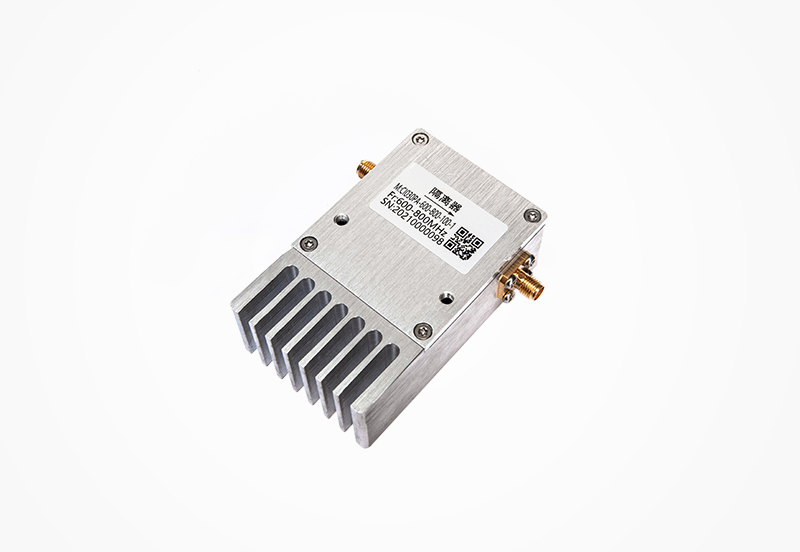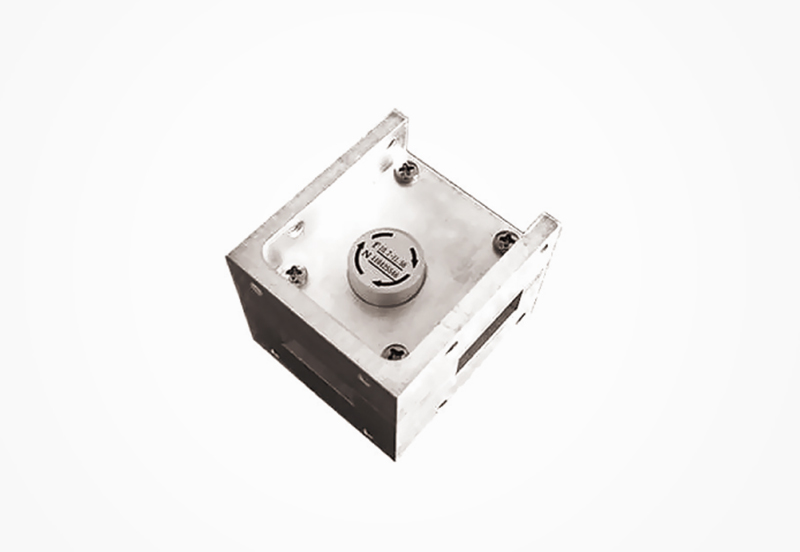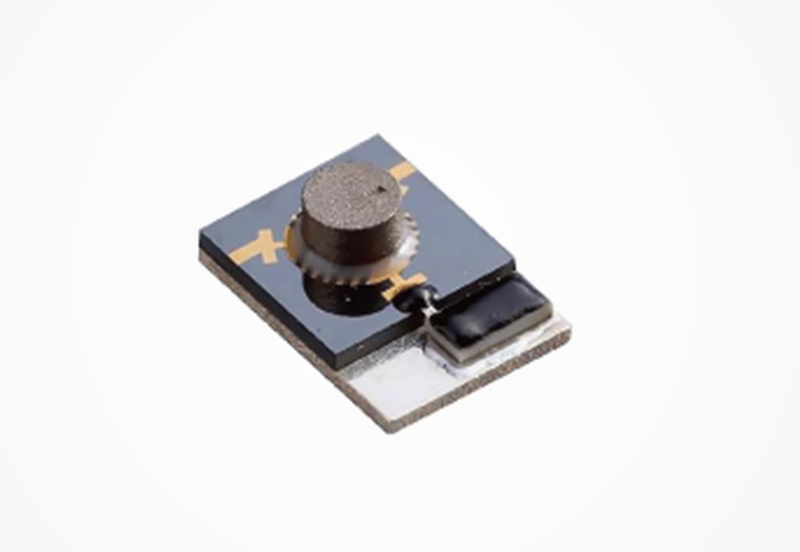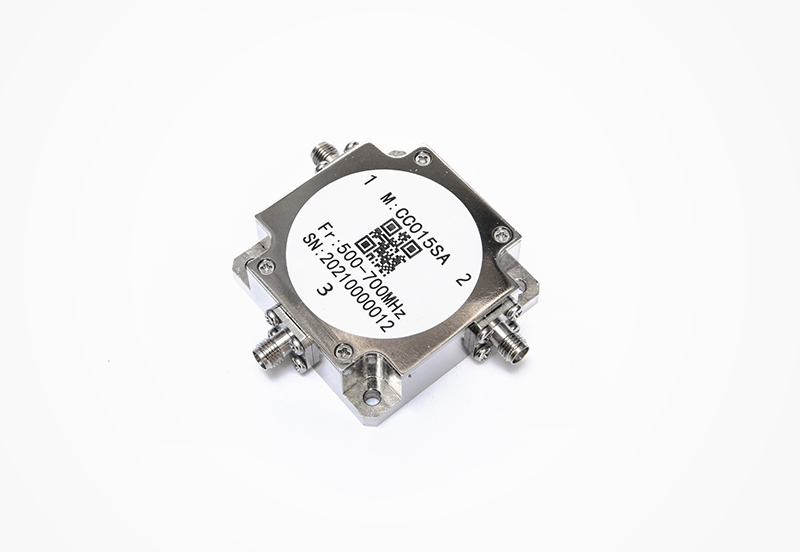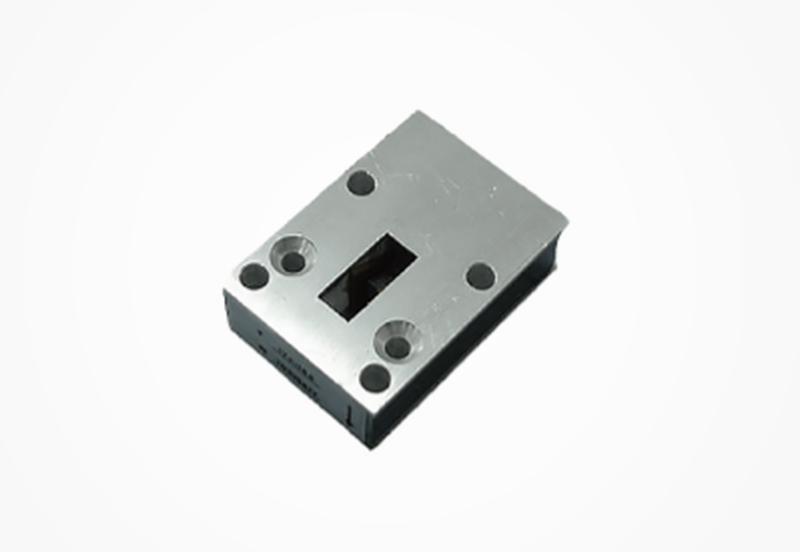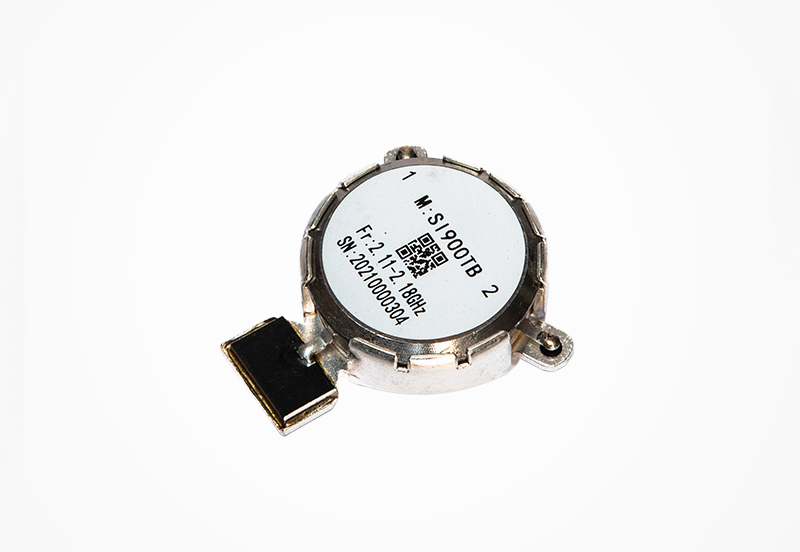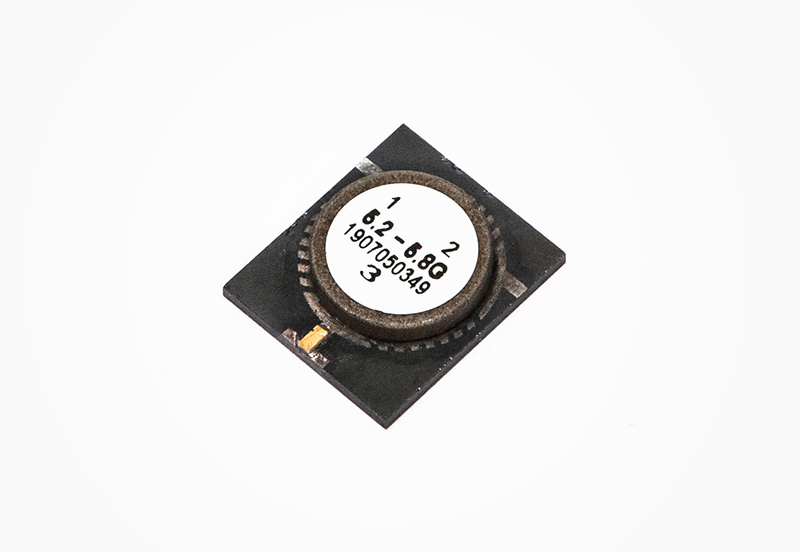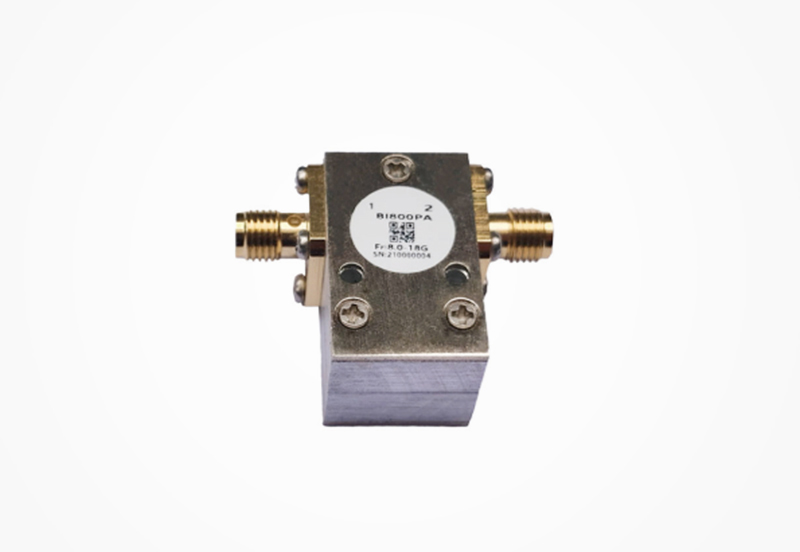




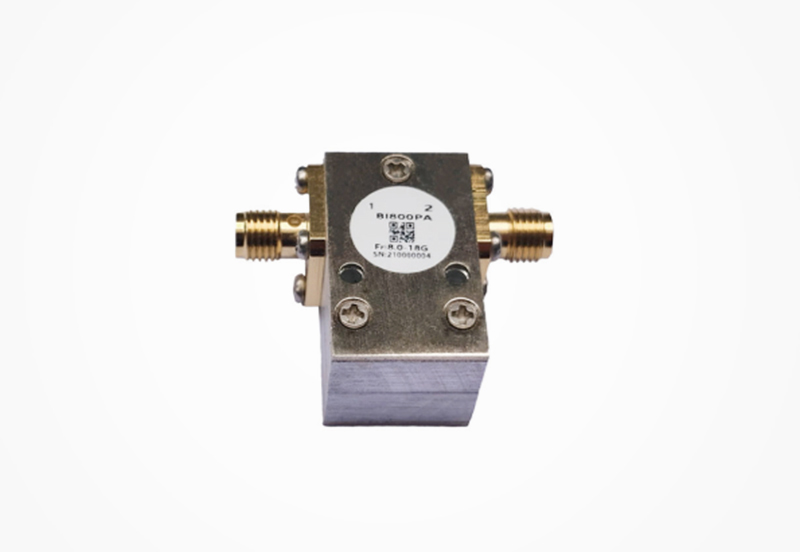
5G massive multiple-input multiple-output (MIMO) systems serve as the core infrastructure for high-capacity, low-latency wireless communication, deploying dozens or even hundreds of antenna elements to realize beamforming, spatial multiplexing, and ultra-high data transmission rates. Unlike traditional single-antenna or small-scale MIMO systems, massive MIMO arrays face severe mutual coupling, signal crosstalk, and reverse signal interference issues among densely arranged antenna channels. RF isolators, as non-reciprocal passive ferrite devices, have become indispensable core components for stabilizing 5G massive MIMO system operation by enabling unidirectional RF signal transmission. These devices allow forward transmission of transmit signals with minimal insertion loss while strongly suppressing reverse reflected signals, effectively isolating each transceiver channel in the massive antenna array.
The working mechanism of RF isolators in 5G massive MIMO systems relies on the gyromagnetic effect of ferrite materials under fixed magnetic bias, which breaks the reciprocity of electromagnetic wave transmission. In practical base station deployment, each power amplifier (PA) and antenna unit in the massive MIMO array is equipped with a dedicated RF isolator. Forward signals from the PA to the antenna pass through the isolator with insertion loss typically controlled below 0.8dB, ensuring efficient radiation of 5G sub-6GHz and millimeter-wave signals. In contrast, reverse signals reflected by antenna mismatches, channel multipath effects, or adjacent antenna coupling are attenuated by more than 28dB to 35dB, preventing reverse interference from disrupting the operating state of front-end PA modules.
The application value of RF isolators is more prominent in millimeter-wave massive MIMO small cells. Millimeter-wave 5G signals feature short wavelengths and high signal attenuation, making beamforming accuracy critical for system coverage and capacity. Tiny reverse signal reflections can cause phase distortion of beamforming signals, leading to inaccurate beam steering and reduced spectral efficiency. High-performance 5G-specific isolators maintain phase stability within ±5° across the full operating band, ensuring precise beam alignment of massive MIMO arrays. Additionally, isolators effectively avoid power saturation and nonlinear distortion of multi-channel PAs caused by superposed reverse reflected power, improving the overall linearity and stability of the MIMO system. By eliminating inter-channel interference and protecting core RF devices, RF isolators lay a solid foundation for 5G massive MIMO systems to achieve gigabit-level user rates and ultra-reliable communication.


Contact Phone:
0755-26701085 0755-26701002
Company Address :2nd Floor, Building A, Juchuang Jingu Creative Park, Xili Street, Nanshan District, Shenzhen