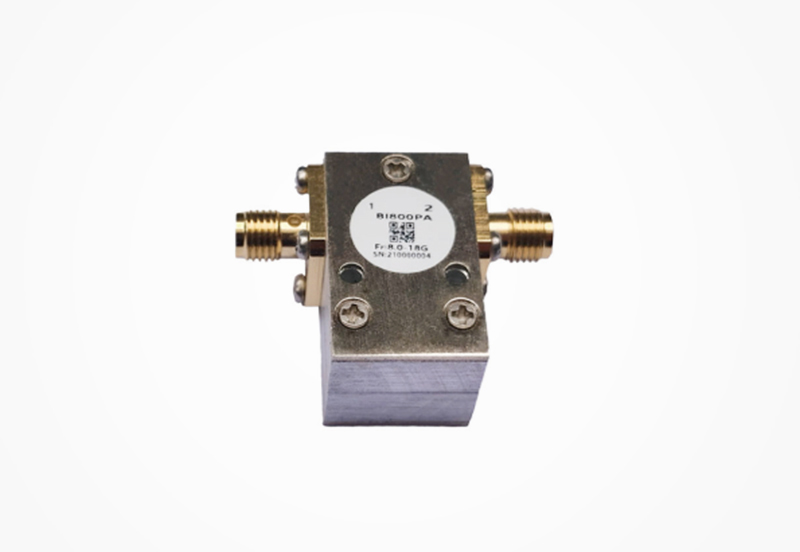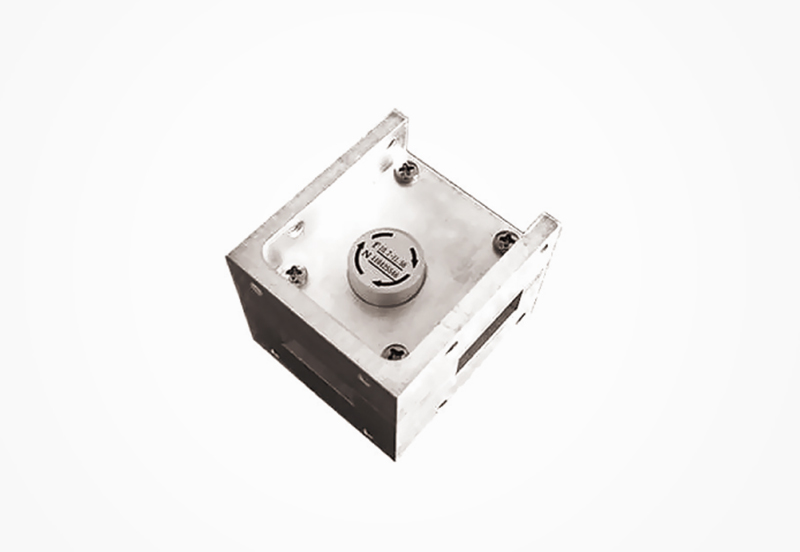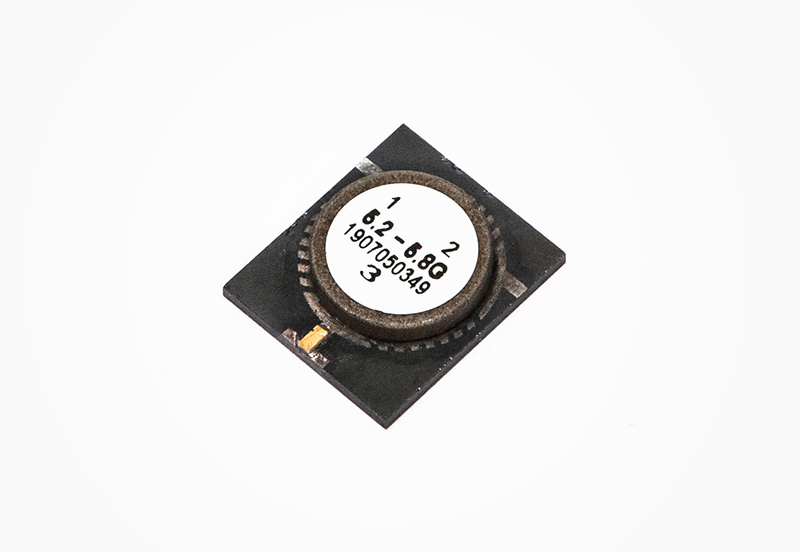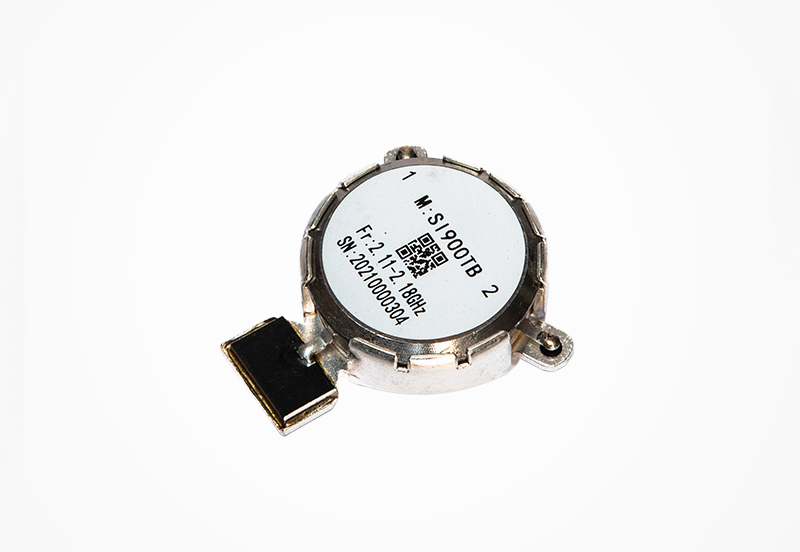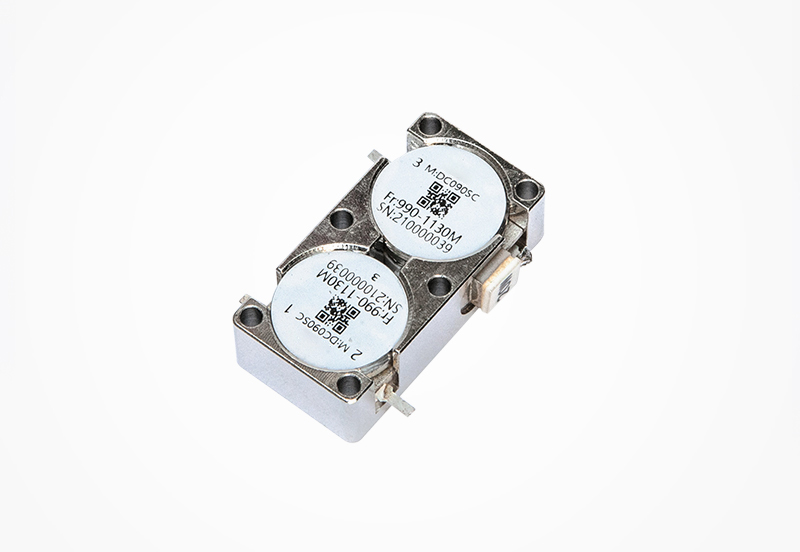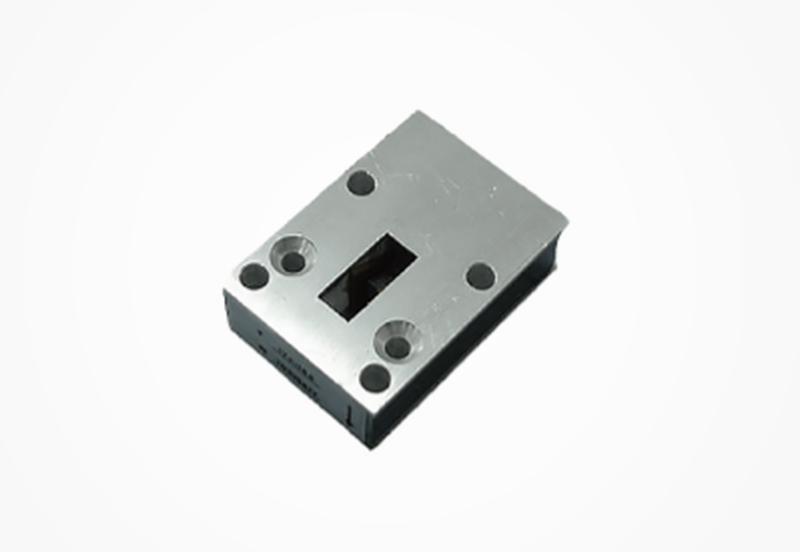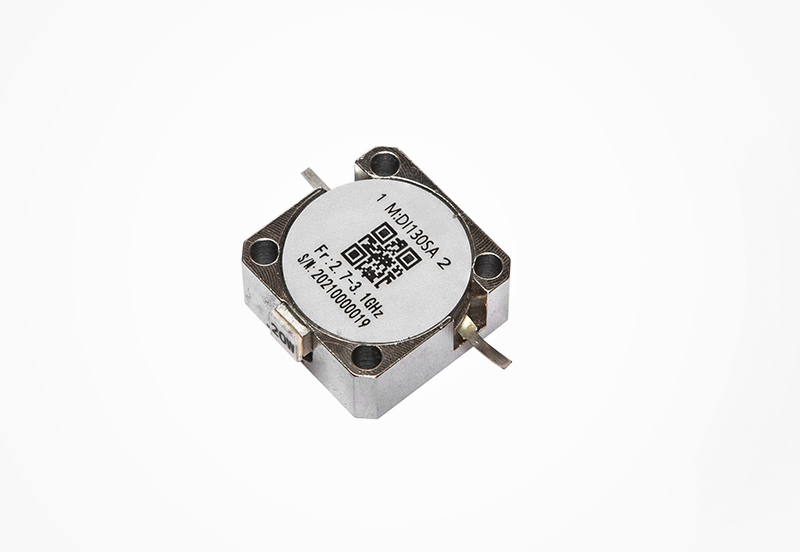




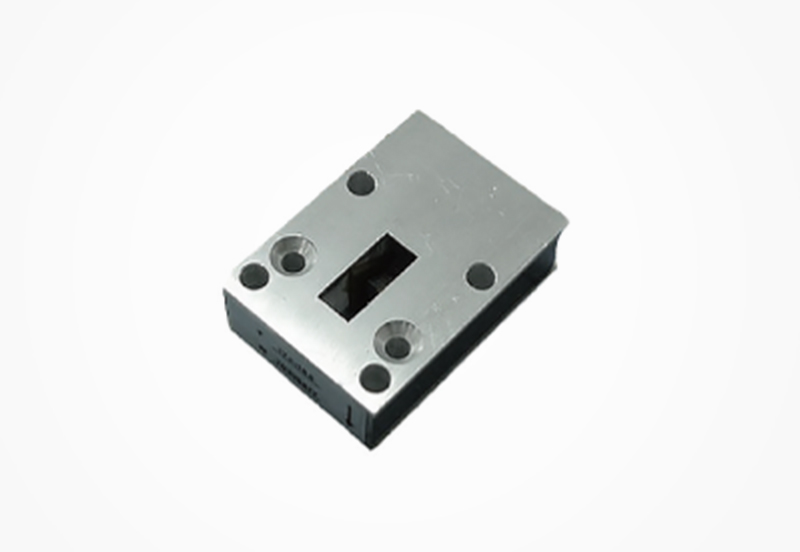
RF isolators rely on the core working principle of three-port circulator integration with matched termination loads, where port 3 serves as the dedicated power absorption and heat dissipation terminal that determines the device’s power handling capability and operational stability. In standard RF transmission scenarios, forward RF signals input from port 1 transmit to port 2 with extremely low insertion loss, ensuring normal signal transmission for downstream equipment such as antennas and power amplifiers. However, any impedance mismatch, load mutation, or short-circuit open-circuit faults at port 2 will generate reverse reflected power, which cannot return along the original signal path due to the non-reciprocal characteristic of ferrite devices. Instead, all reverse power is precisely guided to the built-in matched termination at port 3, where electromagnetic energy is efficiently converted into thermal energy through resistive absorption, realizing complete attenuation of reverse signals and protecting upstream RF components from damage caused by reflected power .
Heat dissipation management of port 3 termination is the key technical bottleneck restricting the high-power performance of RF isolators, especially in continuous-wave and high-duty-cycle operating environments. The termination load concentrates all unwanted reverse power and even occasional full-power reflected energy under extreme fault conditions, leading to rapid heat accumulation in a limited miniature structural space. If the heat cannot be dissipated in time, the local temperature of the termination will rise sharply, which will not only increase the insertion loss of the isolator and reduce isolation performance but also cause thermal aging of ferrite materials and internal dielectric components, and even lead to permanent burnout of the termination load in severe cases. For high-power RF isolators used in industrial and communication fields, the peak power borne by port 3 termination can reach hundreds of watts or even kilowatts, putting forward extremely strict requirements on thermal design .
Modern high-performance RF isolators adopt systematic thermal optimization schemes for port 3 heat dissipation to solve the above problems. In terms of structural design, manufacturers integrate high-thermal-conductivity copper alloy heat sinks with the termination load, and attach the heat sink to the metal shell of the isolator to expand the heat conduction area and accelerate heat outward diffusion. For surface-mounted SMT isolators widely used in miniaturized equipment, a special thermal pad layout is adopted to directly connect the termination assembly with the system motherboard’s thermal conduction layer to realize rapid heat transfer. In addition, high-temperature resistant and high-power matched termination materials are selected to improve thermal stability and power tolerance. Finite element thermal simulation technology is also applied in the design stage to optimize the heat dissipation path, avoid local heat accumulation, and ensure that the isolator maintains stable electrical performance and long service life under long-term high-load operating conditions .


Contact Phone:
0755-26701085 0755-26701002
Company Address :2nd Floor, Building A, Juchuang Jingu Creative Park, Xili Street, Nanshan District, Shenzhen