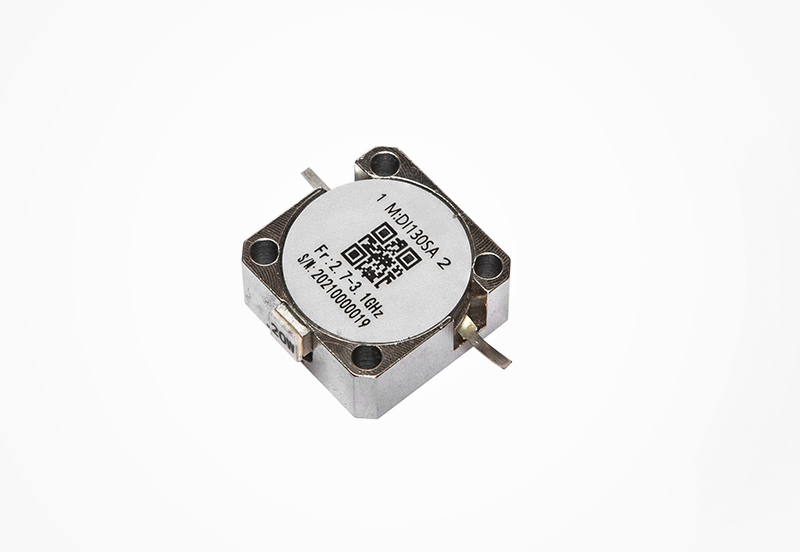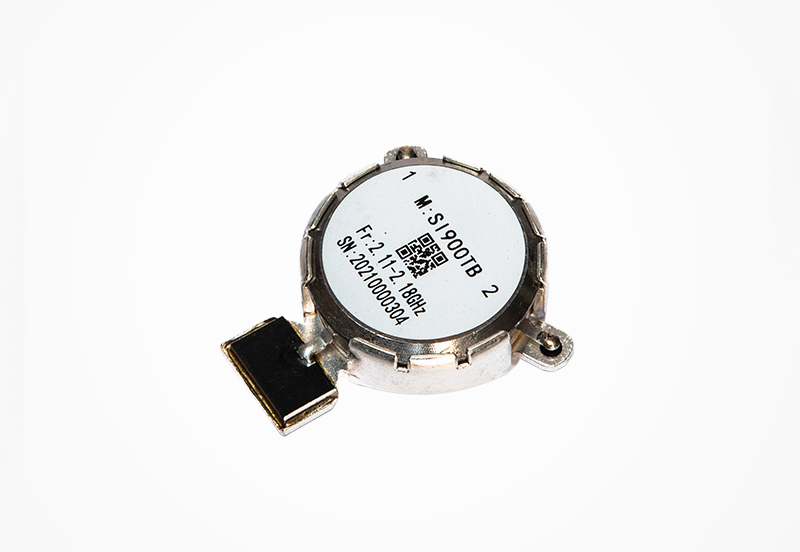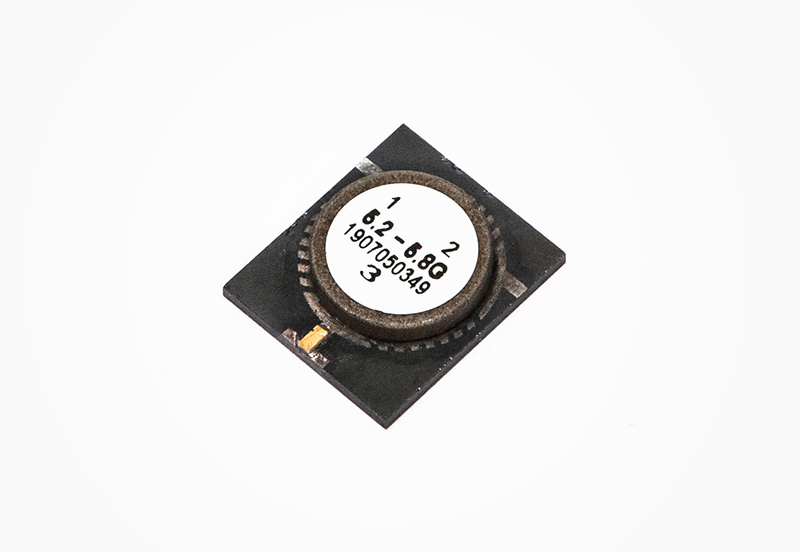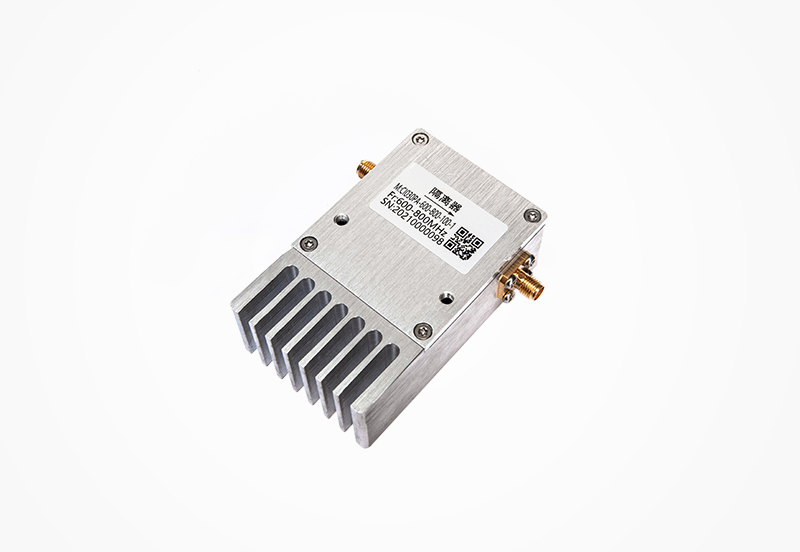




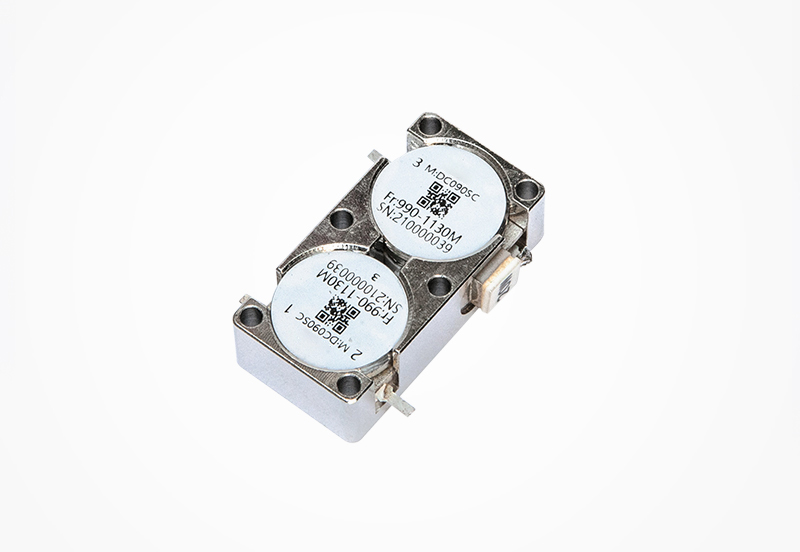
Microstrip RF circulators with professional PCB mounting configurations have become core passive components for modern compact RF and microwave circuit systems, featuring planar structural design and high compatibility with standard PCB manufacturing processes. Unlike traditional coaxial and waveguide circulators with bulky structures, this mounting-type circulator adopts a fully planar microstrip transmission line layout, with a Y-shaped symmetric junction structure where three signal ports are arranged at 120° intervals to ensure uniform signal transmission and isolation performance. The core structure integrates high-performance ferrite pucks and miniature permanent magnets, encapsulated in a low-profile ceramic or plastic shell, which effectively reduces the overall footprint while maintaining stable non-reciprocal signal transmission characteristics. This structural design fundamentally adapts to high-density PCB layout requirements, solving the space occupation and wiring complexity problems of traditional circulators in integrated circuit design.
The mainstream PCB mounting forms of microstrip RF circulators are divided into SMT surface mounting and drop-in embedded mounting, both of which support automated industrial assembly and reflow soldering processes. SMT models feature miniaturized packaging specifications ranging from 0603 ultra-small size to 1812 high-power size, with wrap-around solder pads on three ports, enabling direct surface soldering on PCB substrates without through-hole drilling. This mounting method greatly simplifies PCB production procedures, improves assembly efficiency, and reduces manual operation errors. Drop-in mounting types are designed with positioning grooves and fixed via holes, which can be accurately embedded in reserved PCB slots, providing higher mechanical stability and better heat dissipation performance. Both mounting modes strictly follow 50Ω impedance matching standards, perfectly docking with mainstream microstrip transmission lines on PCBs to avoid signal reflection and impedance mismatch problems.
Standardized PCB layout specifications are critical to the stable operation of microstrip RF circulators, requiring standardized grounding and wiring designs during board development. Engineers need to arrange dense grounding via fences around the RF traces and the bottom of the circulator device to form a complete shielding grounding system, which suppresses electromagnetic interference and signal crosstalk between ports. Meanwhile, sufficient copper foil reserved under the device body enhances heat spreading capacity, avoiding performance degradation caused by local overheating during long-term operation. In addition, the port marking arrows on the device must be consistent with the system signal flow direction during mounting to ensure accurate one-way signal circulation. With the advantages of small size, low insertion loss, high port isolation and easy integration, PCB-mounted microstrip RF circulators are widely used in 5G communication front ends, phased array radar systems, satellite communication modules and various compact wireless transceiver equipment, becoming the preferred component for high-density RF circuit integration.


Contact Phone:
0755-26701085 0755-26701002
Company Address :2nd Floor, Building A, Juchuang Jingu Creative Park, Xili Street, Nanshan District, Shenzhen