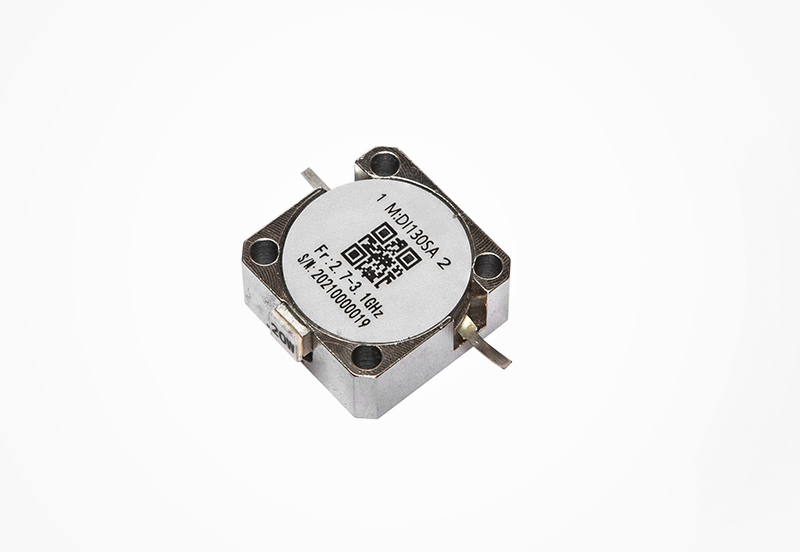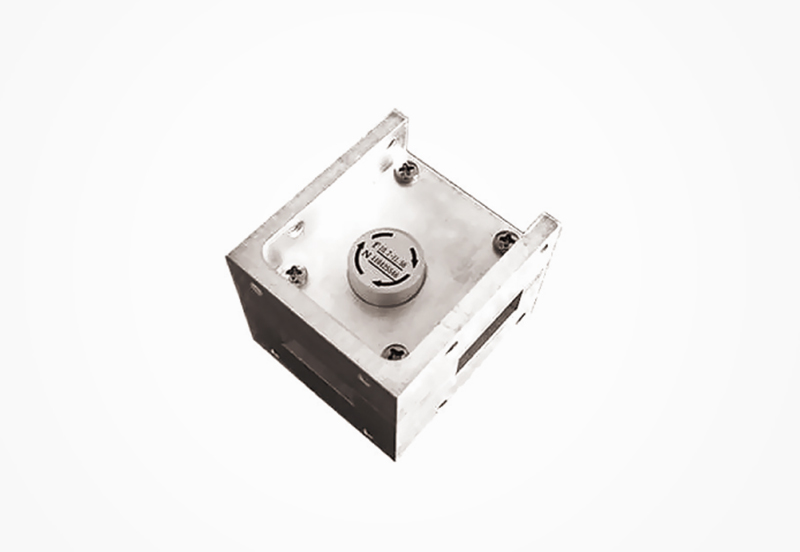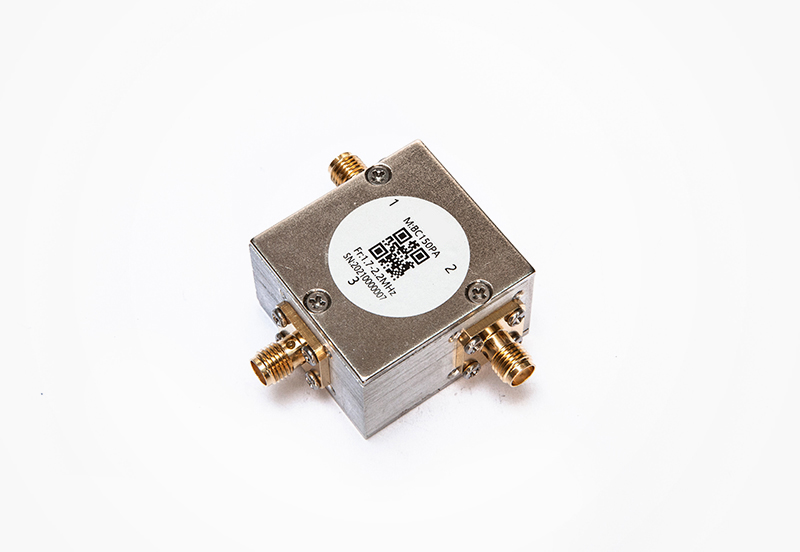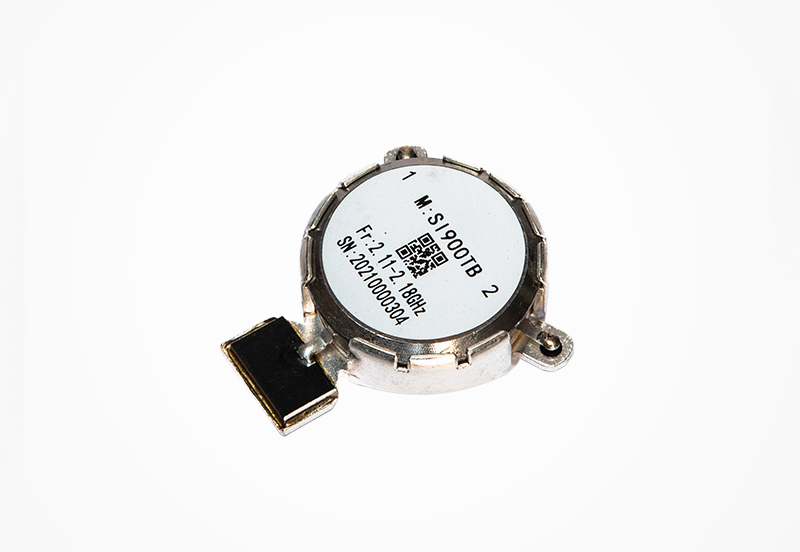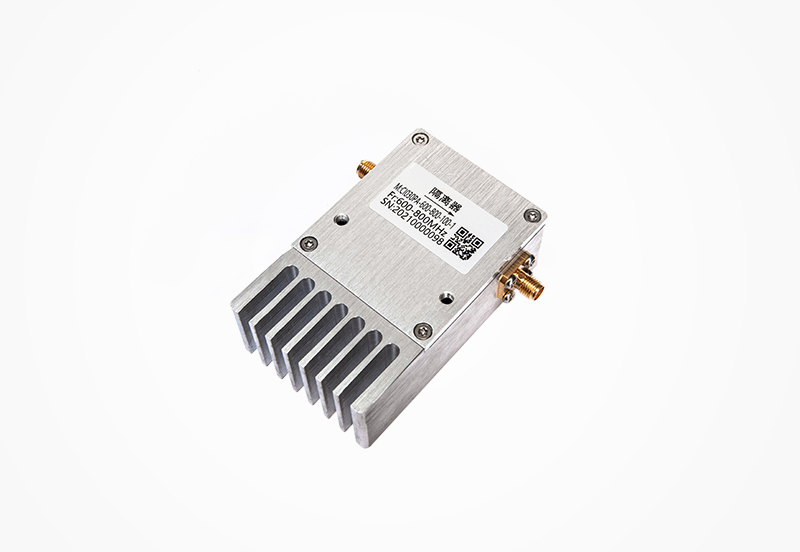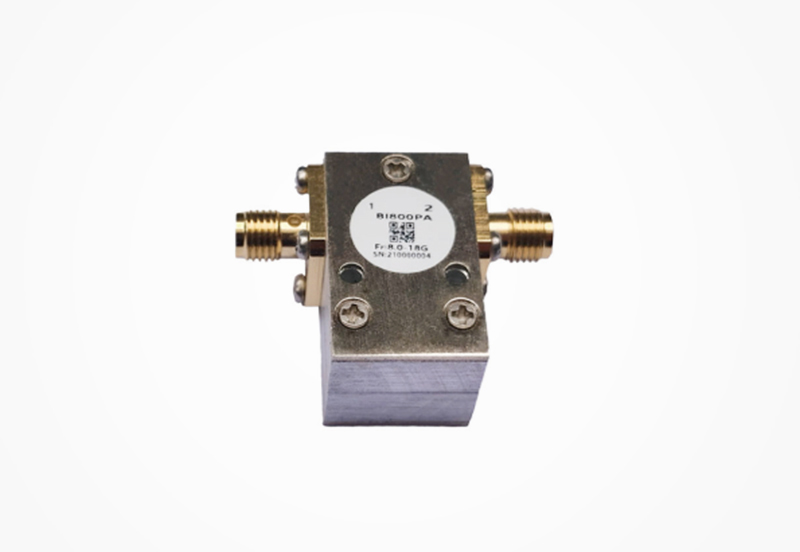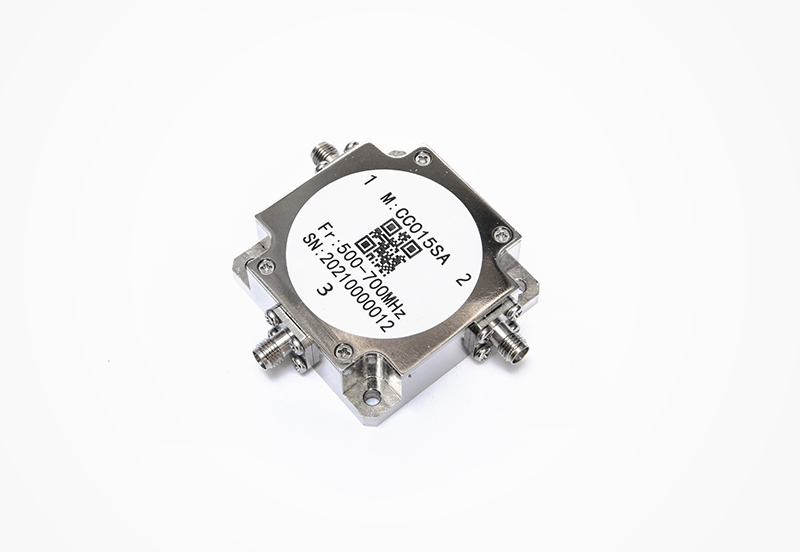




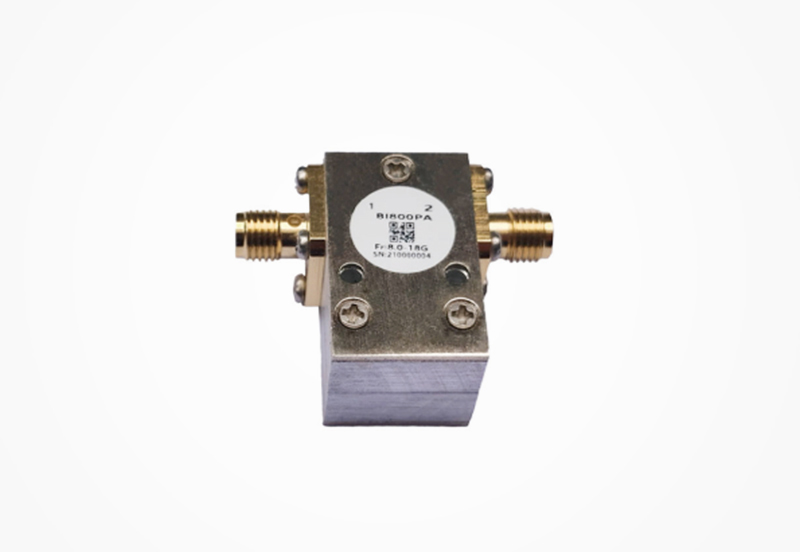
A high power RF isolator is a specialized non-reciprocal passive microwave component designed to withstand and regulate high-power radio frequency signal transmission in complex RF systems. Built on the ferrite magnetization principle, this device enables low-loss forward signal propagation while severely attenuating reverse reflected power, making it an indispensable protective component for high-power RF and microwave equipment. Unlike standard low-power isolators, high power models are structurally optimized for extreme power load conditions, with enhanced internal cavity structures, high-temperature-resistant ferrite materials, and high-power matched termination loads to avoid breakdown or performance degradation under peak and continuous power operation. Typical power ratings of commercial high power RF isolators range from several hundred watts to tens of kilowatts, covering continuous wave (CW) and pulse power working scenarios for industrial, military, and aerospace applications.
The core working mechanism of high power RF isolators relies on the non-reciprocal electromagnetic characteristics of transversely magnetized ferrite materials. Under the bias of a high-stability permanent magnet, the ferrite junction produces a Faraday rotation effect that varies with signal propagation direction. Forward RF signals pass through the ferrite core with minimal insertion loss, usually controlled below 0.8 dB to ensure efficient signal transmission. In contrast, reverse reflected signals generated by load impedance mismatch, antenna detuning, or system resonance are completely offset and absorbed by the internal high-power resistive load. This unidirectional transmission characteristic effectively isolates backward interference signals and prevents high-power reflected energy from damaging core devices such as RF power amplifiers, transmitters, and signal sources.
Structural and material optimization is the key to the superior performance of high power RF isolators. Manufacturers adopt high-precision cavity processing technology and add heat-conducting dielectric materials such as PTFE around the ferrite core to improve heat dissipation efficiency, solving the overheating problem caused by long-term high-power energy absorption. In addition, the internal matching circuit is precisely calibrated to achieve ultra-high VSWR performance, reducing signal reflection during forward transmission. The shell adopts metal sealing and anti-corrosion treatment, which enhances mechanical stability and environmental adaptability, allowing normal operation in high-temperature, high-humidity, and vibration-intensive industrial and outdoor environments.
High power RF isolators are widely deployed in high-power RF system scenarios that require strict signal protection and stable transmission. They are core components in radar transmitting systems, satellite communication ground stations, high-power broadcasting transmitters, industrial microwave heating equipment, and military RF test systems. In radar systems, they protect high-power transmitting amplifiers from reflected signals caused by target reflection and antenna switching. In industrial microwave equipment, they stabilize output power and avoid equipment burnout caused by load changes. With the rapid development of high-power wireless communication and microwave industrial equipment, high power RF isolators with higher power tolerance, wider frequency bands, and more compact structures are continuously iterated to meet increasingly stringent system operation requirements.


Contact Phone:
0755-26701085 0755-26701002
Company Address :2nd Floor, Building A, Juchuang Jingu Creative Park, Xili Street, Nanshan District, Shenzhen