
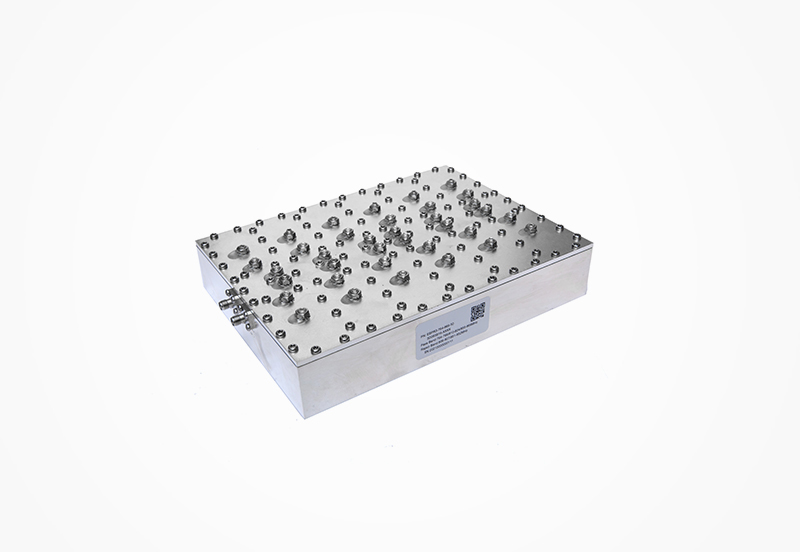
Group delay equalization is a critical design technique for radio frequency (RF) and microwave filters aiming to achieve linear phase response, a core performance metric for high-fidelity signal transmission in modern communication systems. Linear phase characteristics ensure that all frequency components of an input signal propagate through the filter with identical time delay, eliminating phase distortion that degrades signal integrity. In standard conventional filters such as Chebyshev and Butterworth topologies, phase response is inherently nonlinear across the passband, resulting in significant group delay variation. This variation causes pulse spreading, signal waveform distortion, and intersymbol interference (ISI), which are particularly detrimental to wideband communication signals including 5G NR, ultra-wideband (UWB) radar, and high-speed digital communication waveforms. Group delay, defined as the negative derivative of phase with respect to frequency, quantifies the time delay of each frequency component, and equalization targets the flattening of this delay curve across the entire operational passband.
The implementation of group delay equalization relies on specialized equalizer networks integrated with the main filter circuit, including both passive and active compensation topologies. Passive equalizers typically utilize lumped LC networks, coupled resonant structures, or distributed transmission line segments that introduce frequency-dependent phase shifts to offset the inherent nonlinear phase response of the primary filter. Active equalizers, commonly adopted in high-precision wideband systems, employ operational amplifiers or RF amplifiers with tailored feedback networks to achieve precise group delay compensation with minimal insertion loss. Design engineers must balance key trade-offs during implementation: excessive equalization circuitry may increase insertion loss, enlarge circuit footprint, and introduce additional ripple in the filter amplitude response. Advanced computer-aided design (CAD) simulation tools are essential for iterative optimization, enabling precise tuning of equalizer component parameters to minimize group delay variation while preserving the filter’s original bandwidth, stopband rejection, and passband flatness.
The practical value of linear phase filters with group delay equalization is prominent in modern high-data-rate communication and precision measurement systems. In wireless communication transceivers, linear phase response ensures that modulated signals with complex constellations, such as 64-QAM and 256-QAM, arrive at the demodulator without waveform distortion, improving bit error rate (BER) performance and system spectral efficiency. In radar and satellite communication systems, consistent group delay guarantees accurate time-of-flight signal measurement, which is critical for target positioning and long-distance signal synchronization. Additionally, group delay equalized filters are widely applied in audio RF broadcasting and high-speed optical communication conversion modules, where signal fidelity is non-negotiable. With the continuous evolution of wideband communication technologies, the demand for ultra-flat group delay linear phase filters continues to rise, driving the development of miniaturized, low-loss, and wide-range equalization design methodologies.


Contact Phone:
+86-0755-26701085
+86-0755-26701002
Company Address :
2nd Floor, Building A, Juchuang Jingu Creative Park, Xili Street, Nanshan, Shenzhen


 CN
CN