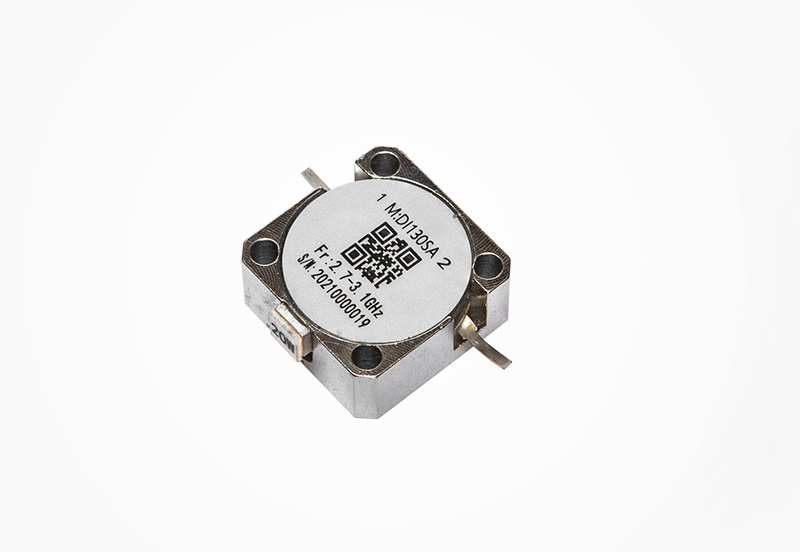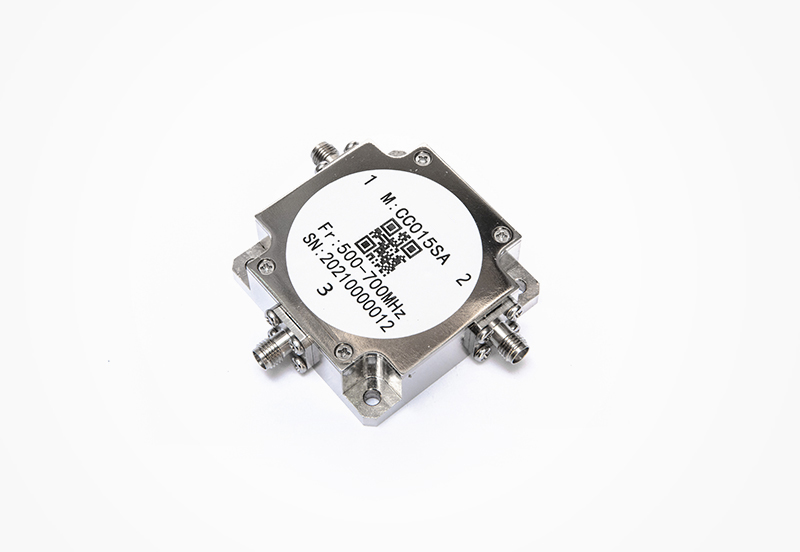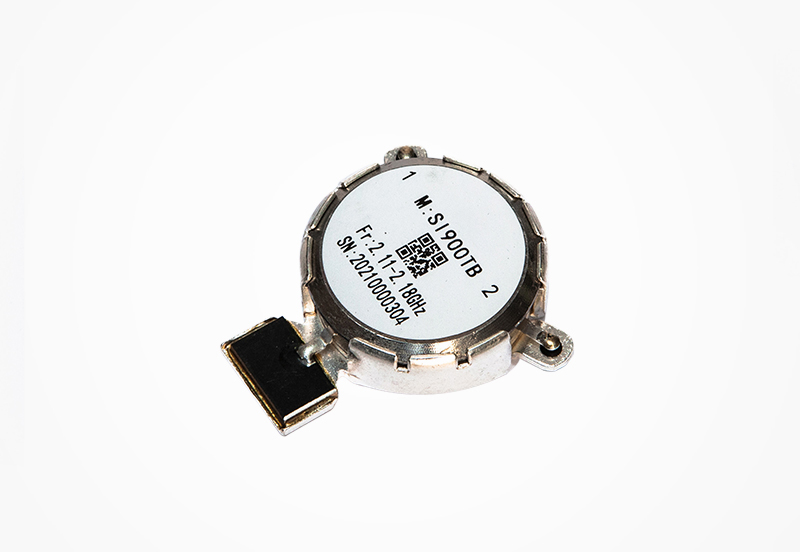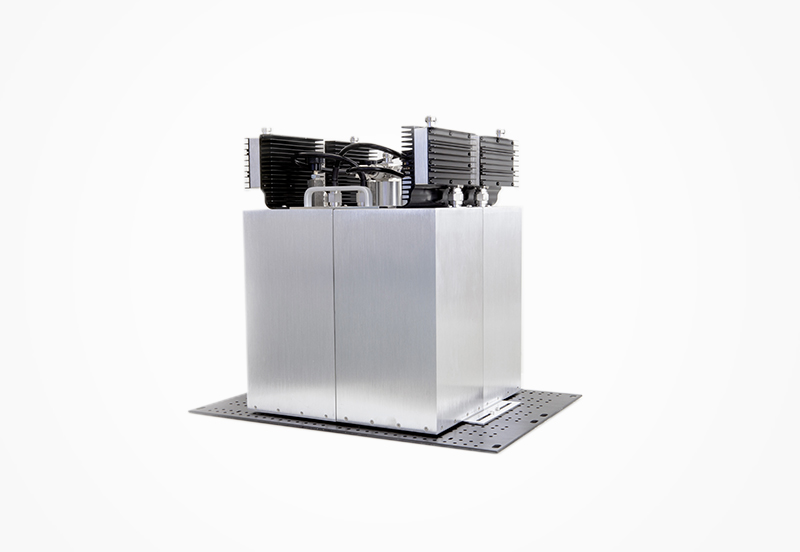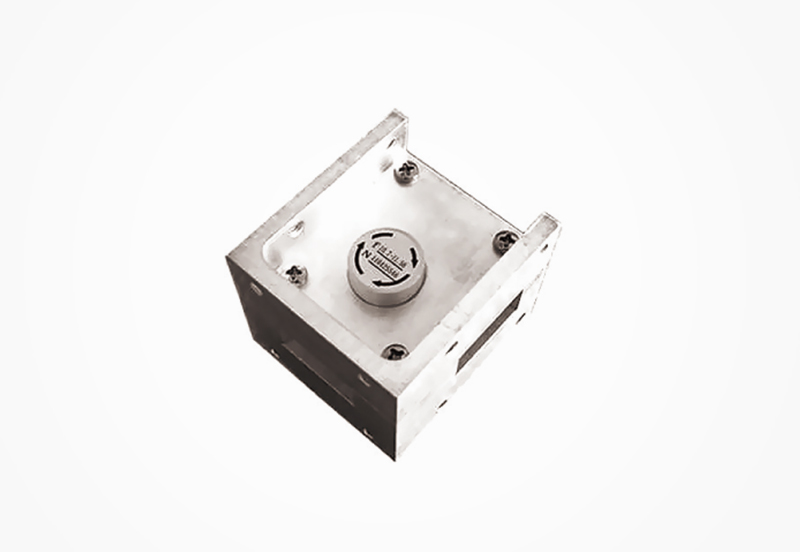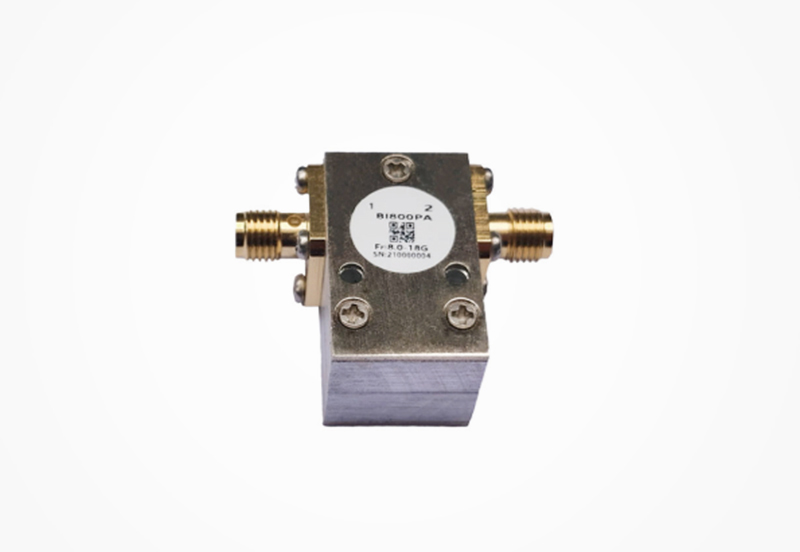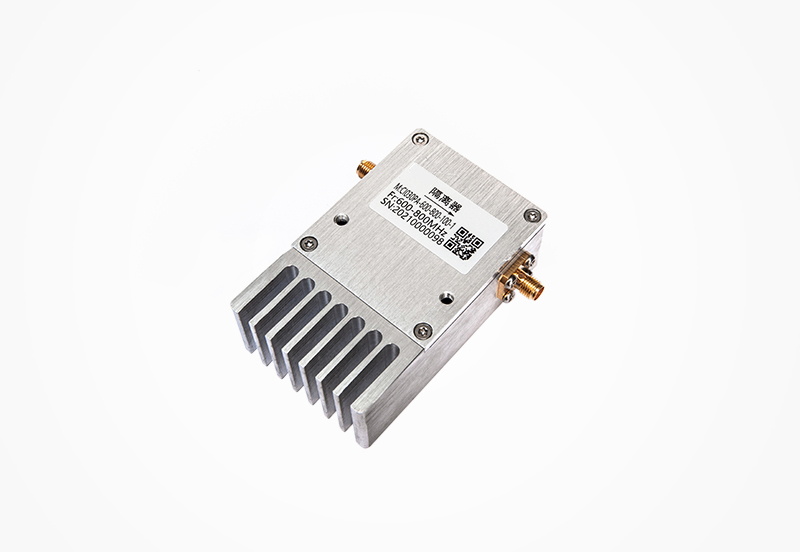


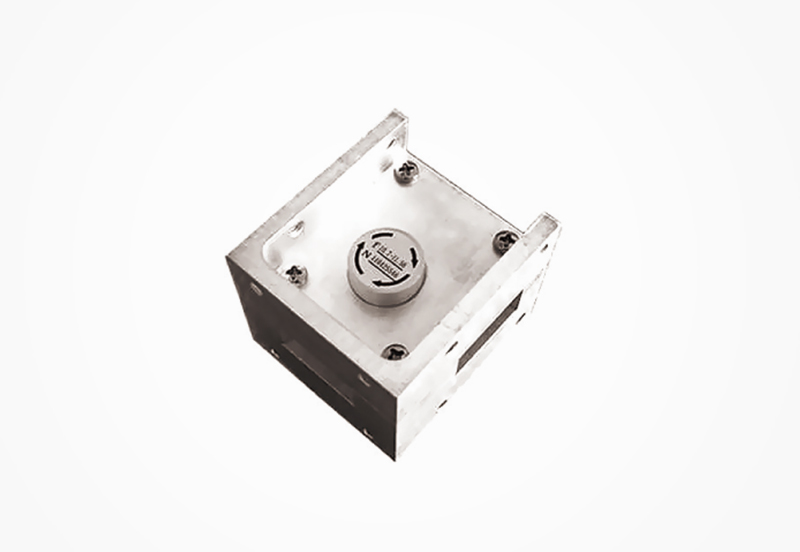
An RF circulator with an integrated load is a specialized non-reciprocal passive microwave component that integrates a high-precision matched termination load directly into the circulator housing, eliminating the need for external load installation and wiring. Traditional three-port RF circulators require users to equip a separate 50Ω or 75Ω matched load on the isolated port to achieve isolator functionality and absorb reverse reflected power, which increases system assembly complexity, occupies extra installation space, and introduces additional signal loss and connection instability. The integrated load circulator optimizes the structural design by embedding a high-power, low-reflection resistive load inside the compact device package, forming an all-in-one signal routing and power dissipation module. This integrated design maintains the core non-reciprocal transmission characteristics of ferrite circulators while greatly improving the integration and reliability of RF front-end systems.
The working principle of the integrated load RF circulator is consistent with conventional ferrite circulators, relying on the gyromagnetic effect of magnetized ferrite materials to realize unidirectional signal transmission. When an RF signal is input from the signal port, it is transmitted to the antenna or load port with extremely low insertion loss, ensuring normal forward signal transmission. When reverse reflected signals, standing waves, or residual power are generated at the output port due to load mismatch, impedance changes, or system interference, the circulator will guide all reverse power to the integrated built-in load. The high-performance internal load completely dissipates the reverse electromagnetic power in the form of heat, preventing reverse signals from flowing back to the front-end transmitter, amplifier, and other sensitive components. This working mechanism effectively isolates forward and reverse signals and suppresses signal reflection interference.
This type of circulator exhibits outstanding performance advantages in practical engineering applications compared with discrete circulator and load combinations. First, it reduces parasitic parameters caused by external wiring and connectors, effectively lowering insertion loss and improving port impedance matching accuracy, which optimizes the overall signal stability of the RF system. Second, the integrated structure enhances mechanical vibration resistance and environmental adaptability, avoiding signal failure problems caused by loose external load connections in high-vibration working scenarios such as communication base stations and vehicle-mounted radio systems. In addition, the integrated design saves equipment layout space, simplifies system debugging and maintenance processes, and reduces overall engineering costs.
RF circulators with integrated loads are widely used in wireless communication base stations, radio frequency test instruments, radar front-end systems, and short-distance wireless transmission equipment. In transmitter front-end circuits, they can stably protect power amplifiers from reverse power impact and load mismatch damage. In RF test systems, they provide accurate impedance matching and signal isolation, ensuring the authenticity and stability of test data. With the continuous miniaturization and high integration development of modern RF systems, integrated load circulators have gradually replaced discrete component combinations and become the mainstream choice for high-reliability RF signal processing units.


Contact Phone:
+86-0755-26701085
+86-0755-26701002
Company Address :
2nd Floor, Building A, Juchuang Jingu Creative Park, Xili Street, Nanshan, Shenzhen


 CN